If you're wondering what tools you really need for sourdough baking, this guide shares the equipment and ingredients I use regularly to bake successful loaves at home.
I didn't always love sourdough. In fact, I used to think it was a little too sour for my taste. But a few years ago, after an emergency surgery, a friend brought me a loaf of her homemade sourdough. For two weeks, it was the only thing I really wanted to eat. That simple loaf completely changed my mind about sourdough, and it kicked off my own sourdough journey.
When I first started baking, I assumed I'd need a kitchen full of fancy equipment. The truth is, you only need a handful of tools. The right ones just make the process so much easier and more enjoyable.
I've broken this list into what I consider must-haves and nice-to-haves. If you're just getting started, grab a few of the must-haves and see how you feel before diving further into the sourdough obsession. In fact, the must-have items are exactly what I bought for my 86-year-old dad this summer when I taught him how to bake his first loaf.
Must-Haves
1. Dutch Oven
A Dutch oven is one of the most important tools for baking great sourdough at home. It traps steam during the first part of the bake, which helps create that beautiful oven spring and crisp crust.
If you only buy one piece of equipment for sourdough, this should be it.
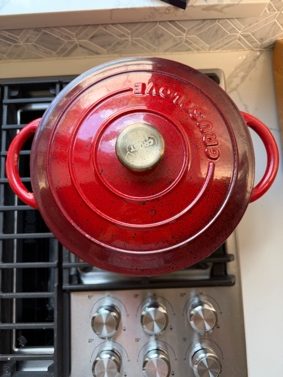
If you are just looking for the basic Dutch oven, here is a great and affordable option. If you want to splurge, Le Creuset makes some of the most beautiful — and luxe — Dutch ovens. I like the dark green one, but they have a variety of colors available.
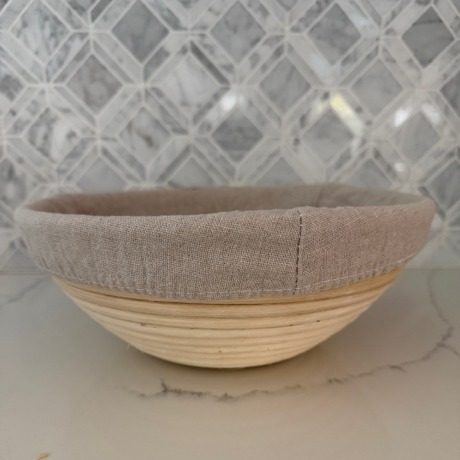
2. Banneton Proofing Basket
Proofing baskets help your dough hold its shape while it rises and create that beautiful artisan pattern on the finished loaf.
3. Kitchen Scale
Sourdough baking works best when ingredients are measured by weight rather than cups. A good kitchen scale makes your loaves much more consistent and accurate. I like this one because it's easy to see the read out with a big bowl on top of it.
4. Silicone Bread Sling
A silicone bread sling makes transferring dough into a hot Dutch oven much easier and safer. Instead of lowering the dough in on parchment paper, you simply place the shaped loaf on the sling and lift it in and out using the handles. I've tried parchment and prefer the sling, but I've included a parchment option below if you'd rather go that route.
5. Bench Scraper
A bench scraper is one of the most useful tools for handling sourdough dough. It makes it easy to divide and shape sticky dough, and moving it around the counter is just as simple. I have tried the metal and plastic and definitely prefer the metal — it's much easier to handle.
Once you start using one, you'll wonder how you ever baked without it.
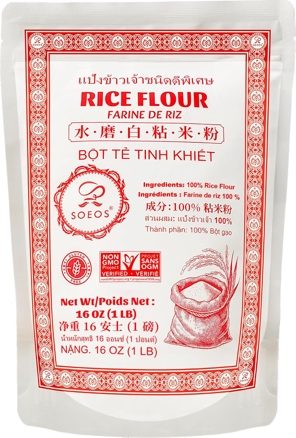
6. Rice Flour
Rice flour is often used for dusting bannetons and proofing baskets because it doesn't absorb moisture the way wheat flour does. This helps prevent dough from sticking during the final proof. You can find this at your local grocery store but here is one I found on Amazon. Just don't make the mistake that my dad made — he used this as his baking flour by accident! Needless to say, that batch went in the trash.
Cheap, easy, and it actually works.
7. Flours
I usually feed my starter with all-purpose flour and bake with the bread flour. However, this summer when I was out of town, I just used bread flour for everything — either way works!
The two flours in my rotation: one for baking, one for feeding my starter.
8. Salt
There's salt for baking, and then there's salt for eating!
For baking: Professional bakers almost always use Diamond Crystal kosher salt because the light flakes dissolve easily and make it harder to oversalt your dough.
For eating: One of my favorite things is to toast a slice of sourdough and slather it in butter. Then I finish it with a sprinkle of flaky sea salt on top. Yum!
Diamond Crystal in the dough, Maldon on the toast.
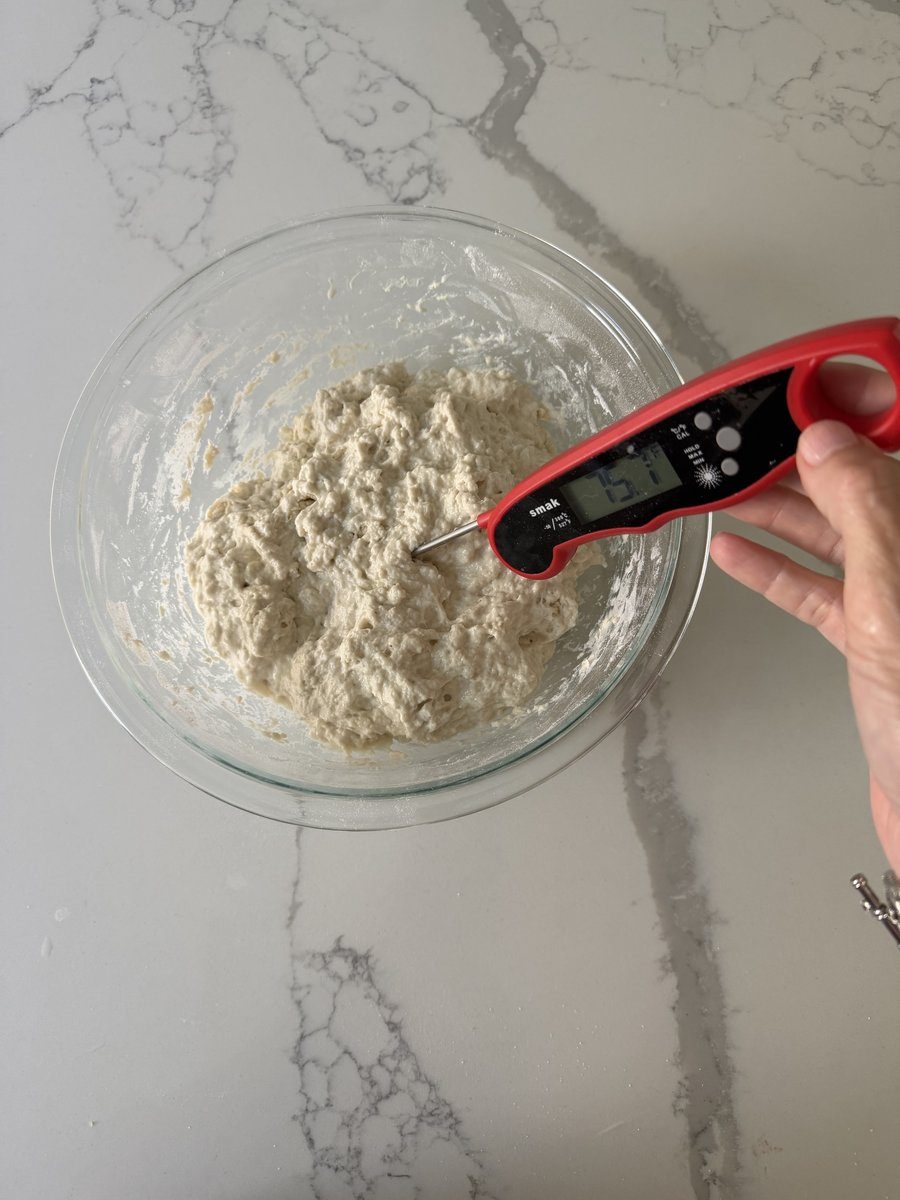
9. Kitchen Thermometer
A kitchen thermometer helps ensure your sourdough is fully baked. Most loaves are done when the internal temperature reaches about 205–210°F. It's a quick, reliable way to avoid underbaked bread. I also temp my bread before bulk fermentation to estimate how long I need to let the dough sit on the counter. I bought this exact one for my dad, too.
Nice-to-Haves
(But Honestly, Must-Haves for Me)
10. Glass Mixing Bowls
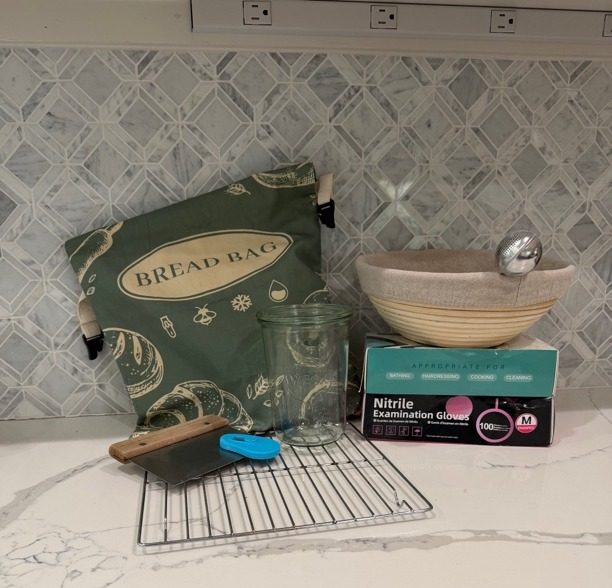
Large glass mixing bowls are perfect for mixing dough and doing stretch-and-folds. I like glass because it's sturdy and easy to clean. Plus, you can actually watch the dough as it ferments. They're also versatile enough to use for all kinds of other baking and cooking projects. You can start with one large one, but you might want to add more to your collection later.
11. Oven Mitts
A good pair of oven mitts is essential when baking sourdough, because Dutch ovens get extremely hot. Thick, heat-resistant mitts make it much easier to safely remove the lid and handle the pot. This is not the time for thin kitchen towels — I have tried and it did not end well.
12. Parchment Paper
Parchment paper is an easy way to transfer dough into a hot Dutch oven without sticking. Many bakers use it instead of a sling, and it works well for beginners. If you go the parchment route, I like these pre-cut sheets.
13. Cooling Racks
Cooling racks allow air to circulate around the loaf so the crust stays crisp as it cools. Cutting sourdough too soon can make the interior gummy, so letting it rest on a rack for at least an hour (two is ideal) is worth the wait. I always keep a rack ready when a loaf comes out of the oven.
14. Lame
A lame is a small razor tool used to score sourdough before baking. Scoring lets the dough expand properly in the oven and creates those beautiful artisan patterns on the crust. It's a simple tool, but it makes a big difference in how your loaf bakes and looks. There are fancy versions out there, but I've found this one to be the easiest to use.
15. Weck Jars
Weck jars are my favorite way to store and maintain sourdough starter. The wide opening makes it easy to feed and stir, and the glass lets you see the bubbles and activity. There are no ridges for starter to get caught in, so they're easier to clean, and they're beautiful enough to keep right on the counter, too.
16. Danish Dough Whisk
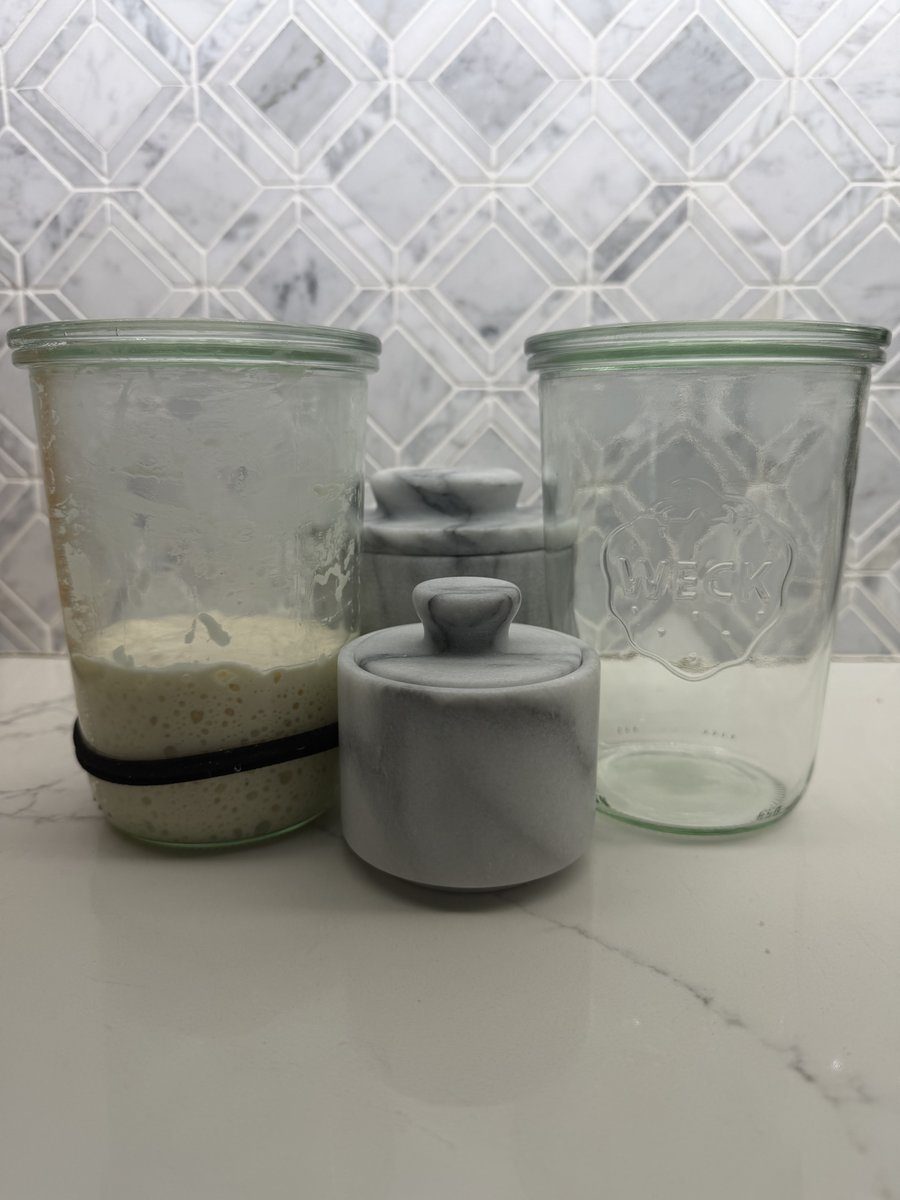
A Danish dough whisk is perfect for mixing sourdough quickly and evenly. The unique coil design helps incorporate flour and water without overworking the dough. It's much easier to use than a standard spoon for thick dough, and I find it mixes my starter and water more completely than a fork does — though a fork will work in a pinch.
17. Silicone Mat
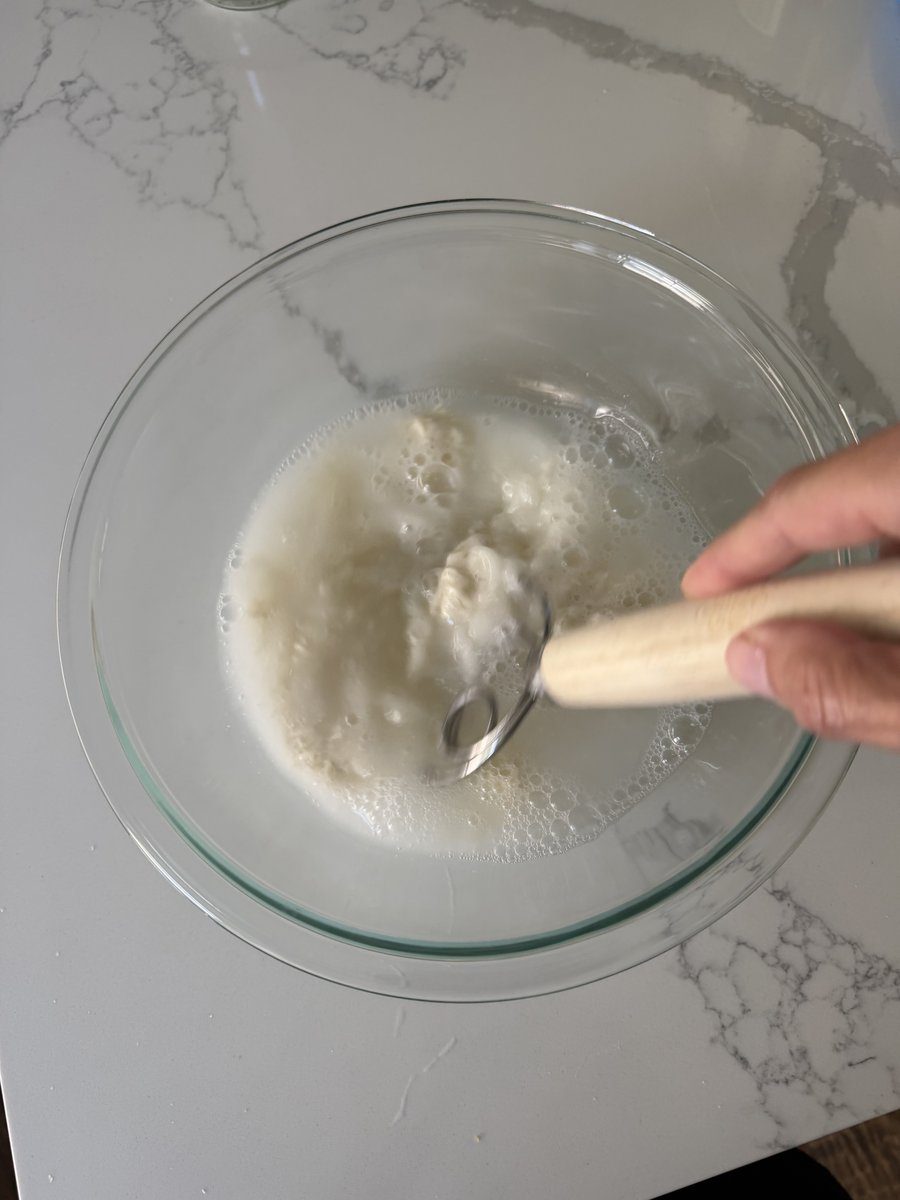
A silicone mat creates a nonstick surface that's great for shaping dough or handling sticky sourdough. It also keeps flour and dough from sticking to your countertop. I use mine constantly when shaping loaves, and it makes cleanup so much easier.
18. Spatulas
Flexible spatulas are incredibly useful for feeding and maintaining my starter. Since they're flexible, it's easy to scrape down the sides and make sure I get every bit of starter incorporated. I always keep one nearby when I'm baking. You probably already have spatulas in your kitchen that would work just fine. I just love the shape of this particular one for getting into every corner of my starter jar.
19. Beeswax Bags
Beeswax wraps are a great reusable, plastic-free way to store bread once it's baked. They let the crust breathe while still keeping the loaf from drying out too quickly, and they're a nice sustainable swap if you're trying to cut down on plastic bags in the kitchen. I left mine behind with my dad, so just purchased this new one — I love the zipper on it.
20. Shower Caps
Disposable shower caps might sound unusual, but they work surprisingly well for covering bowls of dough during fermentation. The elastic edge fits snugly over most bowls and helps keep the dough from drying out. They're an inexpensive solution I use all the time.
21. Gloves
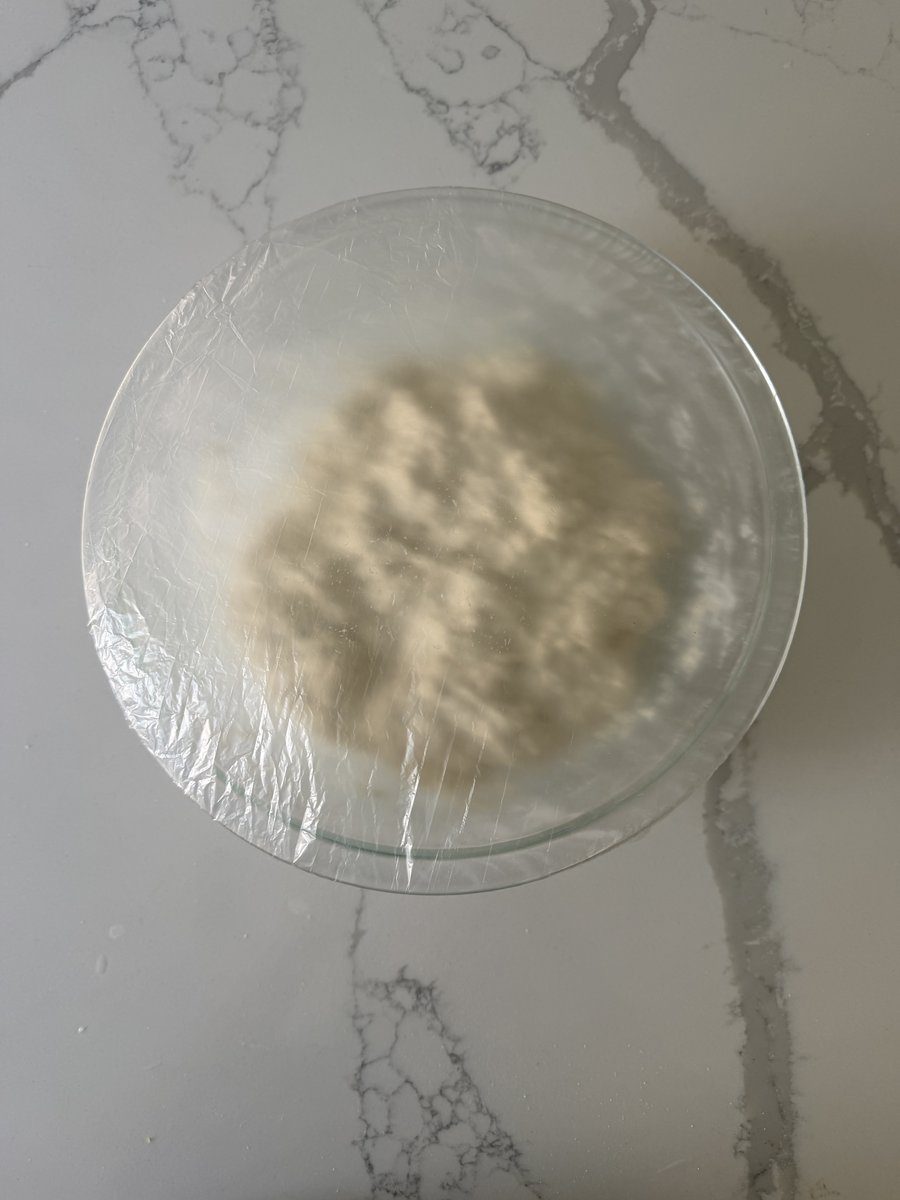
Disposable gloves are helpful when shaping dough or handling very sticky sourdough (I know they aren't environmentally friendly, so they can absolutely be skipped). They keep your hands cleaner and make the process a little less messy, especially handy when dividing dough or working with multiple loaves at once, or when you've just gotten a manicure and don't want to ruin it.
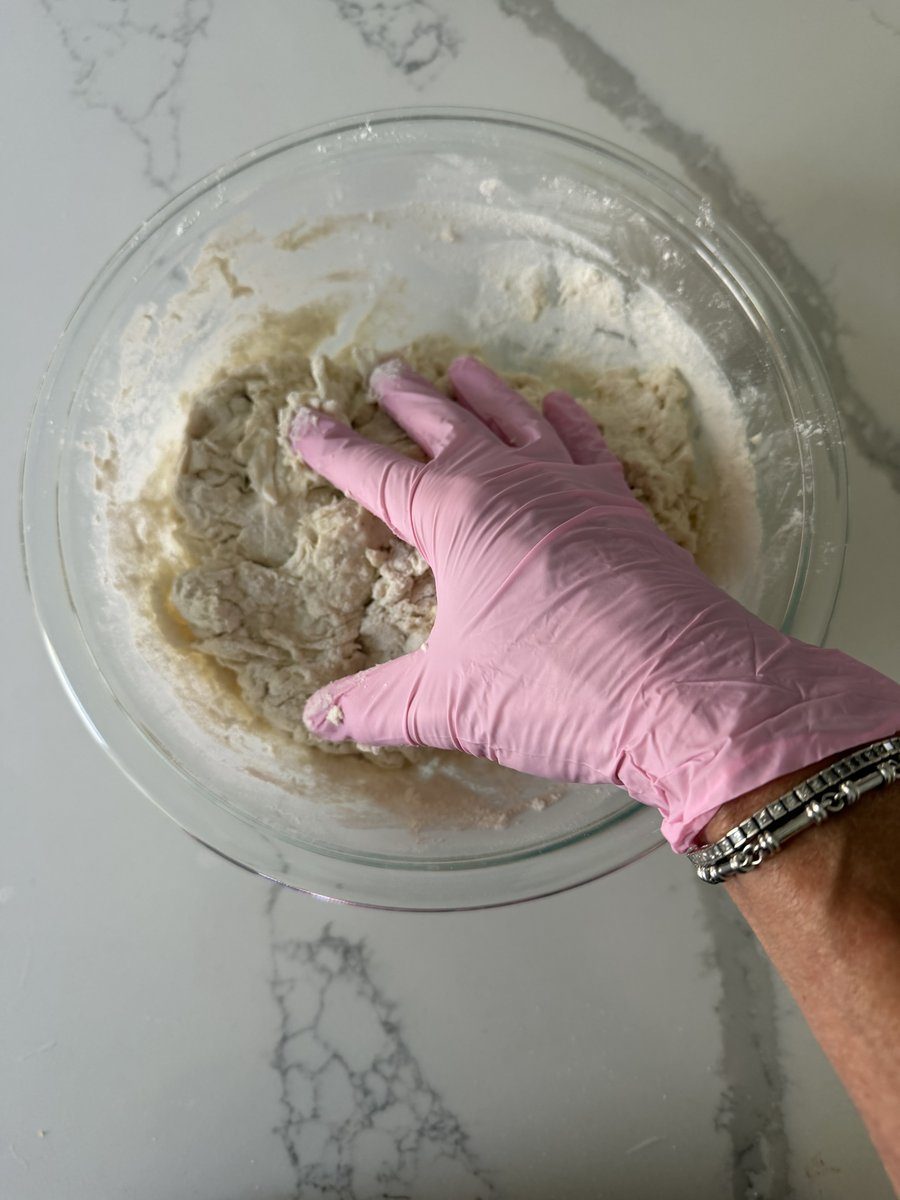
22. Paper Bread Bags
Once your loaf has fully cooled, a paper bread bag is a simple way to store it on the counter. Paper lets the crust stay crisp instead of going soft the way it can in plastic, and it looks lovely if you're gifting a loaf to a friend or neighbor. I love grabbing a sharpie and scrawling a quick note right on the bag before I drop one off. It makes the gift feel that much more personal.
23. Bread Knife — Bow Design
A serrated bread knife is essential for slicing sourdough without crushing that beautiful crumb. I prefer a bow-design knife because the curved handle keeps your knuckles clear of the counter and makes long, even slices easier to control. A good bread knife works well too, but this knife has been a life saver for my parents.
24. Water
Chlorine in tap water can weaken your sourdough starter. If your water smells like a swimming pool, use filtered or bottled spring water instead. I keep a few bottles of spring water on hand just for feeding my starter.
25. Flour Duster
A flour duster lets you evenly dust your work surface, dough, or banneton without dumping on too much flour in one spot. It's a small tool, but it makes shaping and scoring noticeably tidier.
Final Thoughts
Sourdough baking doesn't require a huge number of tools, but the right ones can make the process much easier and more enjoyable. These are the items I reach for again and again in my kitchen.
If you're just getting started, I recommend beginning with a good scale, a Dutch oven, and a proofing basket. Everything else can wait until you know you're hooked.